Kurukulla

Kurukulla
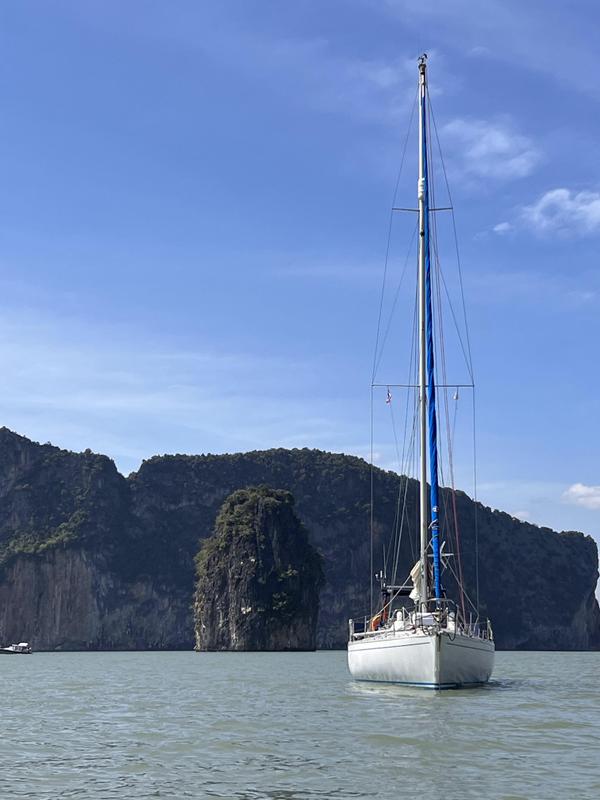
Kurukulla, anchored at James Bond Island, Thailand

Monday, 25 March 2019

The British Virgin Islands to Puerto Rico and Cuba via the US Virgin Islands and the Spanish Virgin Islands.

Getting through the BVI Customs and Immigration on our last visit was relatively simple. We checked in at Virgin Gorda, where they were brisk but efficient, and checked out at the Cruise Liner Quay, where we were deemed a necessary nuisance but again it was efficient.

Gorda Sound + Mosquito Island Resort
This time was different! We arrived in Road Town Harbour at 2000, well after sunset, and somewhat tired after a 5 day beat to windward. For this reason we opted to check in with Customs and Immigration the following morning and simply slotted ourselves into the pre arranged berth at Village Cay Marina. Next morning we were aroused from our slumbers by the marinaio who woke us to remind us we had forgotten to take down our 'Q' flag (signifying we were in quarantine and had not yet cleared customs and immigration). This started 'scene one' of a long running saga. When told we had not forgotten and that we intended to go to customs that morning he became very agitated and insisted that we leave the marina, to go alongside the Customs quay, and deny to all concerned that we had ever been in the marina! The fear was a $10,000 fine for us and up to $50,000 for the marina! We hauled off quickly!!

After a slightly circuitous tour of the harbour (to disguise our origin) we arrived alongside the only serviceable yacht pontoon near the Cruise Liner jetty where we had cleared out 8 months before. After securing Kurukulla and walking up to the offices we were politely but firmly told that clearance was no longer available here and that we should go to the Ferry Jetty a half mile away.
Early morning view from inside the anchorage, Cane Garden Bay!
I asked whether we could tie up in the marina and walk there, the much the easier option, and we were told “yes, not a problem”! To be sure this was sensible we motored Kurukulla over to look at the ferry jetty and a quick glance showed that going alongside there was not going to be easy; it was a concrete and steel jetty with poor fendering and a sea running in. We opted for the marina! We were greeted by the marinaio again who became even more agitated and could not believe the advice we had been given; nonetheless we tied up and set off on foot for the Ferry Jetty.

On arrival we were greeted by a very helpful security guard who asked ”where is the yacht?”, on being told it was in the marina he informed us that if we set foot inside the Customs building without the yacht being present we were in for a fine of … you've guessed it … $10,000. When asked how we were expected to berth the yacht alongside in such an unsuitable berth the reply was that our alternative was to “anchor off and come in by dinghy” (ours was deflated and stowed below), he did however offer to help us berth when we arrived....... Back to the boat!
Ferry Dock, required berthing for Customs and Immigration!

We motored Kurukulla the mile and a half back to the Ferry Jetty and with every fender onboard deployed we berthed alongside. No help arrived! At this point I left Christoph in charge of preventing damage to Kurukulla and I set off into the building armed with the ship's papers and our passports. The Customs official at the door demanded to know what I wanted and when informed I was a visiting yacht seeking clearance he instructed me to “wait outside, we are busy clearing a ferry”. He returned to the air conditioned interior and I struck up a conversation with the delightful lady running the tourist information bureau. As time went on we got to know each other quite well! Half an hour later another Customs official demanded to know why I was “hanging around?” I informed them I was awaiting clearance and was told to “go to the office” and allowed to enter. Which office and where? There were no signs. The cleaner pointed out an empty office in the corner of the building and there I waited another 15 minutes before a young, female customs official arrived and demanded to know what was I doing there? At least she then started the process of clearing me in by inviting me to fill in the usual endless forms.
Anegada
From here it was to the cashier to pay the dues (she was the only one to smile at me during the whole process) and then it was to the Immigration desk. Having made me wait 5 minutes whilst she chatted to her fellow “worker” to prove her superiority, she then demanded the papers and passports. She asked when we were planning on leaving and I informed her the 15th of Feb but that we may wish to stay up to 10 days longer so would she please stamp the passports for the 25th; she stamped them for the 15th and then informed me that if we wanted to stay longer we would have to go to the Immigration Service central office and apply for an extension. By then I was on the point of turning round and leaving the BVI there and then! Her intention was to do anything that would make life more difficult for us; we could have legitimately requested a three month stay hence, other than being deliberately difficult, there was no other reason not to stamp the passports with the 25th date. We then launched into the saga of putting on latex gloves, taking another few minutes, before she would deign to touch the passports or the forms. By now I was controlling my frustration with some difficulty; I am usually an extremely placid person and have dealt with multitudinous similar situations in past years but this one was by far the worst; I was on the point of losing it!


Eventually the forms and passports were handed back to me without a single word. It was back to Customs to pay the environmental tax ($10 per head) and then we were in.
Jayson on the helm
I escaped the building as fast as possible vowing never to return to the BVI. In the meantime Christoph had been thrown off the jetty and told to return onboard for not wearing a shirt! The numerous incoming tourists overflowing their shorts and not wearing a shirt seemed to go unnoticed! We returned to the marina and immediately went ashore for a calming drink! The rest of the day was spent cleaning/maintaining Kurukulla and recovering my sense of humour.

Sadly our arrival was not the last of my dealings with Customs and Immigration. A day later Jayson, our joining crew member, was due to arrive, by air, in the late evening. At 2200 I got a message from him saying that he had been detained at Immigration because he was not in possession of a return flight ticket and could I help?
The devastation at Trellis Bay
Fortunately, before I had time to respond they released him but retained his passport. All we had to do then was for both of us to go back to the airport with a letter signed by me assuring Customs and Immigration that I would be responsible for ensuring his departure..... Apparently he should not have been allowed on the incoming flight without some proof of mode of departure! Luckily he had not been turned straight around and put on the next plane out..... That day's crisis resolved we re-victualled the yacht and prepared for a morning departure next day. All's well that ends well!
Little Jost van Dyke anchorage


For the next 10 days we cruised around all of our favourite anchorages and some new ones seeing what progress had been made in recovering from hurricane Maria. Saba Rock in Gorda Sound was still a building site with no signs of reopening in the near future, but some of the grounded ships had been refloated; Anegada seemed almost back to normal;
Anegada is recovering but some are not yet rebuilt!
Soper's Hole was still in deep recovery with the Pusser's Landing Pub now fully closed and slowly being rebuilt but a new restaurant/bar/shop Kelly's doing well in its absence and a second bar on the waterfront reopening whilst we were there. The debate over where the new “Willy T” floating bar/restaurant could be moored is raging on; it is not allowed back in the Bight, the Norman Island anchorage, and is presently moored in Great Harbour on Peter Island. During our stay in the BVI we visited twice for an overnight. The tradition of crews diving in, naked, from the deck on the Willy T seems to continue but the tradition of the owners giving free drinks to those that do has been stopped, apparently a young woman had an accident whilst doing so and this has led to the practice being “banned”.

Guana Island anchorage
After 10 days we said goodbye to Jayson, who was then heading for the Dominican Republic for a walking tour and we then met up with another friend, Jan Willem van der Klooster, who runs his own skippered charter business and was also sailing for a week in the BVI. He had chartered a fifty footer for the week and had a crew of 11+1 onboard. We sailed in company for a few days, revisiting yet again our favourite places, racing them from bay to bay. We won all the races!

The bar onboard the new "Willie T"
By now we were growing weary of the BVI and ready to move on. Our next destination was the USVI but before we could go there we had to obtain an ESTA and visit US soil to get it processed before we could enter the USVI in Kurukulla. Mad but true. The only way to do this is to catch the ferry from the BVI to the USVI, process your entry and then take the ferry back to the BVI. Cost approx $100 per head to satisfy US bureaucracy! Only then could we set sail for St John's.

We departed the BVI from Soper's Hole where the authorities are in temporary offices, situated at the small ferry landing.
The damage at Sopers Hole 18 months on! Pussers Landing is now closed.
All went well and within 15 minutes we were free to leave, efficient and pleasant! What a contrast to our arrival! From here it was a short, 9 mile, downwind sail, to Cruz Bay, St John's, where we were efficiently welcomed into the USVI. Anchoring in the harbour at Cruz Bay is not easy, all anchorable depths are filled with moorings. After two abortive attempts, whilst following advice from the locals, we eventually made our own decision and anchored on the edge of the fairway between two navigation buoys; fortunately the wind was along the line of the fairway and we lay parallel to the channel.
Zanzibar, as we overtook them!
As we were only planning to be here for the time it took to complete the formalities we took the risk, set off in the dinghy, and in the event we were weighing anchor an hour later having completed all the necessary. We spent that night in a delightful anchorage in Scott Bay, St John's, a beautiful beach backed by a deserted and devastated resort, another casualty of Maria!

During our visit to St Thomas, by ferry, we had taken the opportunity to pre order a new 160w solar panel to supplement the 90w already installed on Kurukulla. Budget Marine in St Thomas was the nearest supplier with a 160w panel in stock; the only problem was that, on return to the BVI and Kurukulla, a quick look at the charts showed that the enclosed bay and marina, which played host to Budget Marine, had a least depth of 1.9m at the entrance and we draw 2.1m! The only solution was to go to the anchorage in Charlotte Amalie, the main port of St Thomas, and take the same local bus to the Chandlery that we had used previously.
Scott Bay, St John
Hence next day we set off for Charlotte Amalie. The anchorage is easy, plenty of room despite the numerous moorings and the usual assortment of boats damaged by Maria and awaiting repair. We anchored within hailing distance of a mast-less Dutch registered yacht and in conversation discovered that they had purchased the boat only a month before Maria hit; they had now been waiting 18 months for a replacement mast. Fortunately the only really serious damage they had incurred had been the mast failure. In the anchorage with us were also some of the most tasteless vessels yet seen! The solar panel collected we decided to check out of the USVI, and using the 48 hours grace allowed, to visit another anchorage on the north coast of St Thomas before departing for the Spanish Virgin Islands and Puerto Rico.
Not exactly pretty! In Charlotte Amalie anchorage.
Sadly we were unable to check out of the USVI at the Border Security office in the Grand Marina, where we had taken advantage of their dinghy dock, as they only handle vessels berthed in the marina (it was expensive and empty but for super yachts making it obvious where they make their money!).

Thus it was that after a visit to the local supermarket we moved anchorage to the other end of the harbour, near “Haul Over cut” where we availed ourselves of an empty mooring to hold Kurukulla whilst we visited the ferry terminal to check out with the authorities. Contrary to the advice of the office in the marina the authorities here only offered 24 hours grace before departure; regardless we took 48!
Magens Bay, St Thomas
From here, despite it's name, we sailed through “Haul Over” cut (it has been cut through and dredged to 2.5m) and headed to Brewery Bay, which is in the lee of the airport runway, for a peaceful lunch and quiet swim.

After that it was onwards to the western end of St Thomas and then a beat to windward for the 8 miles along the northern shore to the delightful anchorage at Magens Bay, the best anchorage we saw in St Thomas despite being on the north coast. Here we stayed our 2 days before departing, in the early morning, for Asenada Honda in the Island of Culebra where we had to check in to the SVI and Puerto Rico. After successfully negotiating the reef to get in we were soon anchored off the town of Culebra and, after a quick, late lunch, we set off ashore to find the authorities.
Culebra anchorage

First call was the local police station which was close by on the foreshore; no joy, in a mixture of Spanish and broken English they informed us that the only clearing in facilities were at the airstrip, a mile away. Back in the dinghy and off into the shallowest depths of the harbour to tie up 200m from the airport terminal, phew! On arrival we found the Border Protection Force offices open until 1700, it was now 1545, great. Having knocked twice on the locked office door, we were admitted to the office by a delightful lady who informed us that the office was closing early as her plane was waiting to take her home; she had been deployed from Puerto Rico to provide temporary cover! Fortunately, after a little persuasion, she agreed to clear us in but only after it became clear that we were already legally in the US and only required a cruising permit (not a requirement for USVI but essential for all the rest of the US and dependencies). That done we exchanged cash for permit and wished her well as she went on her way. From here it was back to Kurukulla, deposit the documents aboard and then on to the “Dinghy Dock Bar” for a refreshing beer and a walk around Culebra before returning onboard.
Punta Bermuda, Vieques

Sadly, with a deadline to pick up our next visitor in Puerto Rico, we had not allowed enough time to really explore the SVI. For that reason the next day we departed Culebra and headed for the 28 mile passage to the western end of the other major island of the SVI, Vieques, an ex military preserve now open to all. As dusk was falling we anchored off the stupendous beach at Punta Bermudes, a long sandy beach that we had all to ourselves. It was totally open to the west but sheltered from the easterly wind and swell. Here we spent a pleasant evening but to meet our schedule we were forced to depart at 0430 heading for Salinas on the south coast of Puerto Rico where we had a marina berth and hire car pre booked.

Salinas Marina
The sail was a down wind slide and we arrived off Salinas at 1430 with no trouble, my only concern was that the chart showed a minimum depth in the channel, leading into the lagoon where the marina was situated, as 2.1m. Exactly our draft! As this channel took us through between the mangroves it was a pretty safe bet that the bottom was soft mud and thus it proved to be. We recorded 1.8m on the echo sounder but were able to push our way through into deeper water without going hard aground (in fact on the way out we recorded 1.4m but still managed to keep moving!).
Salinas Yacht Club building, or what's left!
The berth was stern to, between piles, and head into wind; not an easy one but we managed it without a saga and received several compliments from onlookers who could not believe we had attempted it without a bow thruster! Having arrived safely we checked in with the marina, collected the hire car, and settled down to await the flight bringing Simon in at 2200 in San Juan, 75 minutes drive away and on the north coast.

Had we have realised that over 50% or the road signs in Puerto Rico have still to be re-erected after the devastation of Maria we might have allowed more time!
Ponce church, second city of Puerto Rico
As it was we arrived just as the plane was landing so no harm done. By midnight we were back onboard having only missed our way twice on the return journey!

The following day we took ourselves on a driving tour of Ponce (second town of Puerto Rico) and the interior of the island. The following day was a daylight tour of San Juan returning by night and day three was re-victualling and returning the hire car before departing on the morning of day four.
La Puntilla, San Juan
Ponce and San Juan are spectacular towns full of Spanish architecture, and historic buildings. Very well worth the visit and we lamented the fact we did not have more time in each.

From Salinas we headed out to an offshore island called Isla Caja de Muertos, aka Coffin Island. Here it is a national park with four rangers and no other residents! The buildings and landing stage were again badly damaged by Maria but some of the accommodation was still just tenable. Little seemed to have been done to repair the buildings despite the continuous presence of the rangers! The bay was superb, sandy beach and for the most part an anchorage to ourselves; it was a sandy bottom and we were anchored in 3.5m of water.
San Juan old town.
The only strange part was the presence of several moorings laid off the beach but in less than 2m of water; obviously designed for motor boats and not a thought for sailing vessels with keels! So beautiful was the island that we stayed two nights just to enjoy the tranquillity.

On the morning of day three we set off for Ponce again but this time by sea with the intention of seeing the waterfront area of the town. On arrival we found the anchoring area full of damaged boats, just about clinging to their moorings, hosts of moorings where the bridle had parted and, judging by the amount of marine growth, unused since the hurricane.
Coffin Island anchorage
After an extensive tour of such moorings we found one that was tenable and looked like it might be trusted. Here we settled and eventually went ashore to the adjacent “Boardwalk” for a late evening supper ashore. Next morning we were awoken, and invited to move, by workmen aboard a large floating barge and crane, driving new piles in the harbour to replace the ones damaged and distorted by Maria. We gave up the search for a new mooring and opted instead for a night in the Yacht and Fishing Club marina. The club was very impressive including a 9 hole golf course plus pool, sauna etc. The only snag was the $88 per night price tag for Kurukulla!
Ponce waterfront
Notwithstanding this,we set off by Uber to the beach-front of the town which came as quite a surprise; it was run down and undeveloped; a total contrast to the historic part of the town! After a 2 mile walk to Walmart, to re-victual, we were again in an Uber heading back to the marina and after drinks in the club we returned for supper and the night onboard.

After embarking water the following morning, and settling the bill, we set off to head west intending to go as far as possible before darkness. In the event we entered Bahia de Boqueron, on the west coast of Puerto Rico, just as the sun set; here we dropped the anchor in 3m of water just off the town.
Sunset at Boqueron
The bay is large, 2 miles deep by 2 miles wide, all shallow and an ideal anchorage, even somewhat protected from westerly winds by a shallow reef that almost closes the bay. The “town” ashore was small but lively with a wide selection of bars and restaurants, plus the odd tourist shop, but little else. The tranquillity of the bay and the liveliness of the town encouraged us to stay for three days before moving on.

Main street of Boqueron
On day three we moved the 5 miles up the coast to Puerto Real, a much smaller bay with even less development around it and a worryingly shallow entrance! We recorded 2.5m depth as we entered and we draw 2.1m. Not a lot of clearance! I was reminded of a comment by a fellow sailor in Aruba, “If you can slide a cigarette paper under the keel then all is OK”. Not long after our arrival the weather broke and not only did it rain heavily but the wind started coming from all directions including west; the first time we had seen a west wind since arriving in the Caribbean!
The main street in Puerto Real
Ashore was a small marina but in view of the weather we put off exploring it until the next day. Motoring ashore in a dinghy in pouring rain is never fun. The following morning we went alongside the marina for fuel and water and remained alongside whilst we stepped ashore and researched the “town”; that took less than 10 minutes! One small street with two bar/shops and not much else. We satisfied our thirst and hunger with a snack and beer at one of the bars and then made back to the marina and Kurukulla. By mid afternoon we were back at anchor and planning our departure for the following day.

Puerto Real Marina
Our final port of call in Puerto Rico was to be Mayaguez, some 14 miles north. Once inside the reef virtually the whole bay is anchorable and we chose to anchor as close to the coast as possible about halfway down the bay, where the water depth was greatest relatively close in. The plan was to check out of Puerto Rico and US territory the next morning, purchase some bits for Kurukulla and re-victual before departure the morning after. First stop was the US Customs Building to check out;not so simple; the office had moved up the coast to Aguadilla, some 12 miles further north. After hearing our protests that even their own signage still advertised Mayaguez as the place to check out we were allowed to do the process by telephone and receive our “Despachio” by e-mail. Phew!Whilst in the USVI I had replaced the solar panels sighted on the bimini with a higher wattage version and I was now keen to get the electrical cable needed to reconnect the old panels so that they could be used to enhance capacity when needed. Our quest for cable took us into some of the less desirable areas of Mayaguez and no less than three passers by stopped us to warn us that it was not safe to wander off the main highway! Not very reassuring! Notwithstanding the warnings we did find the electrical retailers and got the necessary cable!
Marlin Marina, Santiago de Cuba
Thereafter it was the supermarket and then back onboard just as the sun was setting. Ideal timing.

We were in no hurry to depart next day but finally sailed off the anchor at 1030 heading west. It was to be a “rocky / rolly” 580 mile downwind sail to Cuba passing south of the Dominican Republic and Haiti. Although we sighted both, we, for the most part stood well offshore to avoid any contact with the local population and their reported lawless elements. Although it is not thought to be as bad as the situation off Venezuela it is still widely discussed and I felt it better to play safe.

As ever with light winds at times and even a few hours on the engine we were destined to arrive off Santiago de Cuba at midnight. Given that the port seemed well lit with plenty of navigation marks visible we decided to abandon the idea of heaving to overnight and opted for a night entry. A call on VHF Ch16 to Guarda Frontera to inform them of our arrival in Cuban waters and intention to enter Santiago de Cuba, and we were on our way in. The navigation was easy, what was not so easy to avoid were the numerous unlit small fishing boats littered along the channel.
Some of Cuba's rolling museum...
Fortunately we managed to weave our way through them without incident. By 0130 we had made contact with the marina at Punta Gorda (the only place we were allowed to go) and had been informed that the authorities would be on hand to clear us at 0700. We anchored off the marina and retired to bed!

Next morning, with the benefit of daylight, we moved nearer the marina and re-anchored before launching the dinghy and rowing ashore.
Self at Santiago de Cuba
The officials were all efficient, pleasant and courteous, a real contrast to Tortola BVI! Within an hour, having seen Customs, Health and Harbour master, we were in. No inspection of the boat was required. The rules were explained in detail: all landings had to be via the marina and it's secure area, we were not allowed to use the dinghy to go elsewhere. Guests onboard needed 24 hours notice for approval and if they were Cuban approval would not be forthcoming!

In the mountains at Fidel Castro's revolutionary HQ
If, as we initially intended, were headed next to Cienfuegos (250 miles west) we would not be allowed to enter any mainland ports in between but could visit uninhabited islands if we wished. (Eventually we decided against going as it would take us 250 miles NW before heading south to Jamaica, over doubling the distance to Jamaica). All of these regulations are designed to stop you smuggling Cubans out of Cuba! Nothing to do with their generous welcome to their country!

The venue for Fidel Castro's victory speech
Over the next five days we visited the city of Santiago de Cuba (twice) and went on a 12 hour excursion to visit the mountain HQ of Fidel Castro and his revolutionaries. Our guide was fascinating and very informative, explaining in detail the history of the revolution and the lifestyle currently enjoyed by rural Cubans, including how the redistribution of land had been managed 60 years ago (there were notices celebrating the 60th anniversary of the revolutionary agricultural reform everywhere! Clearly deemed a great achievement).
Cathedral Square, Santiago de Cuba
The general impression is one of poverty and shortage, homes are majority wooden and rickety with wrinkly tin or palm fond roofs. Horse drawn transport is everywhere mixed with ox carts and cycle rickshaws. All of this mixed with american cars of a long gone era plus heavy lorries and coaches. Local buses are converted old lorries with a cabin built on the back. It was all amazing to see; the people seemed happy and proud of their country and its revolution. That said they were never backward in coming forward and asking for a dollar or two! Cuban currency runs in two forms; local Pesos (PUC) currently 25 to the convertible Pesos (CUC). Visitors are only allowed to trade in convertible currency (1 CUC = 1$ US, less ~15% exchange “tax”; € and £ are not subject to the tax when exchanging.) locals are required to trade in local pesos.

Local housing....
On our final day we were planning to re-victual before departure to Jamaica. We had spotted a very large (in Cuban terms) supermarket in Revolution Square and had been assured that it was the best in Santiago. We caught the mid day ferry to Santiago city, lunched in the same restaurant as our previous visit, “Fabada Marietta” on José A Saco, (it is the only pedestrianised street ) and very good it was too, on both occasions.
and its replacement ...
After that it was a 2km walk to view the square and visit the supermarket. The square was impressive, the supermarket not so. Obviously no expense had been spared commemorating the revolution hence the scale of the monuments, in the case of the supermarket we arrived just as it was closing, 4pm! Having gained entry we discovered that the shelves were overflowing with goods but there were vast stocks of a limited number of items. For example the Nescafé display was five shelves high by two metres long!

Revolution Square, Santiago de Cuba
More Nescafé than they could sell in a year, probably. Most staples were there in similar quantities but the selection of goods available was eclectic to say the least. Despite being a quarter of the shop floor area fresh and frozen were not available due to a lengthy power outage; they were busy emptying all the fridges and dumping the contents! A real tragedy when you see what little is available elsewhere. By now it was “rush hour” and our initial attempts to find a taxi were to no avail hence we decided to cart the few items we had bought back to the ferry landing and return to the marina by water instead.

View of the power station, refinery and source of endless soot!
The lasting impression of Cuba is of a people living with severe shortages but a pride in their country and a happy smile on their faces! Asking for “donations” from foreign tourists is endemic and a way of life for those without numerous jobs to sustain their lifestyle. All youngsters are keen to swap rum/cigars for any electrical items (mobile phones especially) and trendy clothing. If unemployed their sole income is from the government and is equivalent of 7$ US PER MONTH! Compare that with the UK minimum wage of ~10$ an hour! Obviously they have to do whatever they can to supplement this but interestingly crime did not seem to be a problem anywhere.

Departing Santiago de Cuba
The following morning we cleared out of Cuba with the authorities and this time the boat was searched to ensure we had no stowaways! As we departed I could not help feeling like a prisoner just released from prison (not that I have personal experience). It just didn't feel quite right! Much as I had enjoyed the visit to Cuba and loved the people I would think twice about returning.

Onwards to Jamaica ….........


Monday, 28 January 2019

Trinidad to Aruba, Bonaire and Curacao, via the St Vincent Grenadines / Tobago Cays

The old
The best laid plans of mice and men. On the morning we were planning to depart I decided to investigate a small leak on the galley sink drain. Those familiar with the humour of the Royal Navy will understand the phrase “It came away in me hand Chief”. The pipework was completely rotten, made up using ordinary chrome plated brass domestic plumbing fittings! I was amazed it lasted so long on an open to sea drain. After a fruitless search of the local chandlers and a quick trip to the nearest plumber's merchant (useless!) it was down to a quick trip to see my friend Mitchell at South West Fabricators again, to find a solution.
and the new.
I simplified the design and he agreed to make it up in stainless steel, hopefully by close of play the next day (Saturday) or at latest by Sunday mid-day.

Notwithstanding our enforced delay in departure we went to check out with Immigration and Customs on the Friday afternoon before the 1600 deadline for overtime payments (Customs clearance is free before 1600 Friday but after that, until 0800 Monday, it costs TT$265 ~ £30; not a lot but annoying as it is based on your planned time of departure not your time of clearance!). Immigration happily gave us 24 hours grace to depart (in most islands it is 48 hours) but customs have different rules! If we were not departing until tomorrow afternoon then we would “have to come back tomorrow and pay overtime charges”; as a consequence our “plans” changed immediately to a near instantaneous departure! From here to the duty free shop for essential stores and we were set to go; almost! From 1600 Friday, onwards, we were illegal immigrants in Trinidad! In the event Mitchell was good to his word but unable to complete by Saturday close of play and so it was just after mid-day Sunday when we finally slid quietly and inconspicuously out of Chaguaramas, via the fuelling jetty to refuel, before heading to Scotland Bay to anchor overnight.

We departed Scotland Bay at 1100 next day after stowing for sea and a leisurely swim. It was to be a relatively lively fetch for us to be able to weather Grenada and then bear off for Union Island, our planned entry point to the St Vincent Grenadines. Shortly after we departed the Trinidadian coastline we conducted an impromptu man overboard exercise, my sun hat blew overboard! That retrieved we continued on our way. I chose to go to the east of Grenada for two reasons, firstly I thought the winds might be better than in the lee of the island and secondly it kept us further away from the reputed hunting grounds of the Venezuelan pirates. Initially all went well and, as we left the coast of Trinidad behind, the wind veered putting us on a comfortable close reach; too good to be true. Notwithstanding the occasional squall and associated rain we made good progress. By 1800 we were almost level with the southern end of Grenada; then the wind headed us! Too late to opt for the leeward side of the island we were stuck with a beat up the windward side! Fortunately the wind rarely got over 20 kts and so it was still a relatively comfortable, if longer than expected, passage.

By 1100 next morning we had crossed the north of Grenada and were headed up the leeward side of Carriacou (belongs to Grenada) and into the anchorage behind Frigate Island, outside Ashton Harbour, on Union Island (belongs to St Vincent) where we picked up a mooring at 1300. Ashton Harbour is rather a misnomer; the harbour is a derelict marina development that was only ever quarter finished and then abandoned, most of it is less than 2m deep and therefore not accessible to us. To compensate for the lack of a marina a few moorings have been laid outside the “harbour” in the lee of Frigate Island and the man made sea wall that connects it to Ashton. Here we had a quick lunch and then settled for a relaxing afternoon, to catch up on some sleep.

Clifton Harbour, Union Island
The next day we motored the two miles into Clifton Harbour, the main port of Union Island and clearing in venue for St Vincent for yachts. As usual when entering we were escorted in by a boat boy, Tevin, who offered to find us a mooring and assist in the process of picking it up, all for EC$20 ~ £5.50! We accepted! On departure from Scotland Bay we had discovered that we had a problem with the windlass and had to weigh anchor by hand. For that reason we weren't keen to anchor, at least until I had had a chance to investigate the problem. That took it's place behind the holding tank macerator pump which had suddenly decided to spring a leak and was making life in the forward heads rather unpleasant! My plan was for both of these jobs to be done, whilst at anchor in Tobago Cays, in the next three days. The immediate problem was to officially enter St Vincent and get some credit on the data SIM card so that I could search the internet for any spare parts needed. We engaged Tevin again to act as a water taxi to ferry us ashore, not having to get the dinghy out and inflated was worth EC$40! A full 30 minutes in Customs and Immigration and we were in. After that it was Digicel, for the SIM, followed by lunch ashore and finally a trip to the supermarket before heading back onboard and enjoying another lazy afternoon catching up on rest.


Downwind in favourite seagoing attire
Early on Thursday morning we set off, again under engine, for the 3 miles to Tobago Cays. Lazy I know but, although we could have sailed the first 2 miles, the final mile was directly to windward, between the reefs, and not a passage to be negotiated under sail unless there was no other choice. Once anchored off the beach on the SW side of the island of Petit Bateau we came to realise that the water discharge from the fridge had stopped! Defect number three – they always come in threes! As the fridge was relatively full of fresh food this became top priority. Fortunately it was nothing serious, the system had become blocked with marine growth during our time in Trinidad and, after a lot of disconnecting pipes, sucking and blowing, it was eventually cleared. One down! Next the sh*t pump … uggh! Fortunately I had managed to run the pump and pump out the contents of the holding tank before having to disconnect and remove it … phew! Closer inspection revealed that three out of four of the bolts holding the pump together were corroded through or sheered. A Jabsco pump (i.e. supposedly near top of the range) made for the purpose and their choice of metals means that it corrodes away in no time.
Repairing the windlass
This little used pump had lasted less than 5 years and had failed for entirely preventable reasons, if only the designers had gotten their material choices right! Fortunately it can be bypassed until such time as I can get parts or a replacement. Time for a swim....

Next day it was the turn of the windlass, conveniently located in a small locker, in the forward cabin, right up under the bow. Houdini where are you? The good news was that after me having played the contortionist for two hours I had it dismantled only to find that the clutch had jammed not broken; hence, with a bit of filing and polishing, it was possible to render it serviceable again without the need for spare parts. As a precaution I will however get a new piece for the clutch in order to replace the bit that jammed the next time it happens; and it will! After that it was a leisurely swim to clean the last of the Chaguaramas grime off the hull, and there was plenty.

Salt Whistle Bay, Mayreau
There can be few better anchorages in the Caribbean than the Tobago Cays and hence, to make the most of it, we moved moorings to a new and more sheltered position for the morning. After lunch we moved again to Salt Whistle Bay, in Mayreau, for the afternoon and night. The night was not as calm as we had hoped and so on Sunday morning we moved around to Saline Bay and in the process met up with Kalvin, he was one of the two guys who hitched a lift with us to Union Island after our last visit in June. We were greeted like long lost friends. Dinner on the beach consisted of a fillet of white fish (name unknown) and a whole lobster between two, excellent, accompanied by rice, plantain chips and potato salad sides and all washed down with several cans of Hairoun, the local beer. Guaranteed to make anyone sleep well! It was from here that we planned to return to Union Island the following day, Monday, in order to be able to check out with the authorities and make an early departure that morning.

As planned we departed Saline Bay at 0700 and were secure on a mooring in Clifton Harbour, Union Island, by 0800. 0830 found us outside the Customs and Immigration building at the stated opening time but it was not to open before 0900, they were otherwise engaged at the airport! After a coffee, a trip to the bank, the supermarket and then back to C&I we were set to leave. By 0930 we were on our way and sailed under genoa alone round to Chatham Bay where we took shelter to prepare food etc. for the forthcoming three day passage. By 1230 we were ready for departure and sailed out of the bay heading for Bonaire, a 400 mile passage down wind. With the wind behind us it was looking to be a fast passage with Kurukulla easily doing between 7 and 8 knots continuously. Late in the afternoon of the first day we passed a school of whales lazily moving east, probably 20 or so but difficult to tell as for most of them all we saw was the spouts as they broke surface to breathe. Later that same night I was also given a rude shock when, in the pitch dark, I was suddenly struck on the side of the neck by a wet flying fish the size of a medium mackerel! It was one of several who met their end on the decks of Kurukulla during this passage!

Bonaire waterfront
Although we had estimated a three day (72 hour) passage, hence the mid day departure from Chatham Bay, with our better than predicted average speed it turned out to be only a 58 hour sail and hence a late night entry into Kralendijk, the major town of Bonaire. Fortunately it is a very easy port to enter and there were several vacant mooring buoys along the waterfront from which we could take our pick (once we had identified them in the dark!). Next morning we headed for Customs and Immigration to register our arrival (the most efficient and polite so far) followed by a light lunch and a walk about town. Being a tax free haven Kralendijk is a popular stop off for cruise liners; hence, the town was relatively crowded with tourists but fortunately they departed before sunset, allowing peace to descend!

Next day we were greeted by the rather more picturesque view of the sailing ship Mandalay who was alongside along with a Dutch Navy corvette. The day was spent moving into the Harbour Village Marina and then researching Kralendijk on foot finally ending up with an excellent (if somewhat overpriced) meal at an Italian restaurant, “Italy in the World”, near the waterfront. A pre Christmas treat! Next morning we moved into the Harbour Village Marina for a three day stay, partly to make re-victualling and watering easier and partly to make welcoming Nick, a friend of Christoph's, onboard; he was to stay with us over Christmas and New Year, departing from Aruba on the 9th of January.

Sorobon Beach, Bonaire
Our five days in Kralendijk passed quickly. Because of the regulations requiring no anchoring and no overnight mooring, other than off the waterfront of Kralendijk, we spent a couple of days cruising the coast of Petite Bonaire and the southern coasts of Bonaire but being required to return each night rather limited our range. On one day we hired a car to see the bits we would otherwise miss.
Slave houses, Bonaire
Even so Bonaire was an enjoyable stopover and worthy of a visit even if it was tuned more to the demands of the cruise ships than the yachting fraternity.

On 22nd of December we set sail for Curaçao and enjoyed a pleasant downwind sail (despite one brief but torrential downpour) carrying a poled out genoa all the way to the southern tip of Curacao. A brief reach up the coast and we were at the entrance to Spanish Waters, our intended anchorage for checking in to Curaçao.
Spanish Waters anchorage, Curaçao
The anchorage in Spanish Waters is divided into four areas and we chose area A, it was the most convenient to the two possible dinghy landing points. The next task was to set off for the capital, Willemstad, to get ourselves legally into Curaçao.

The following morning, Sunday, our taxi took us straight to the Customs offices for the princely sum of US$30 only to find out, after he had departed, that the Customs organisation had temporarily moved to new premises four hundred metres away. Not so bad! From there it was to the Immigration Offices which were of course over a mile away and on the far side of the harbour, across the pontoon bridge which opened as we approached. Fortunately there is a free ferry service which steps in whenever the bridge is open. After immigration it was the Harbour Master's Office for the anchoring permit but of course they only open on weekdays and close early on Friday; it was Sunday! The harbour was open and functioning but no permits could be issued outside normal working hours; we never did get one!
Pontoon Bridge, Willemstad, Curaçao
We were all singularly unimpressed with Willemstad, despite it's being a UNESCO heritage site, some of the architecture was colourful and preserved the original feeling of the town but much more was shabby or newly constructed with a facade which tried to replicate the original Dutch style. The shops, despite their reliance on cruise ship trade, seemed to be stuck in the last century and many of the window displays were faded and seemed to have been untouched for many years. A strange mix! By 1700 we had had enough and caught a bus back to Spanish Waters.

Fuik Bay anchorage
Christmas eve we paid a brief visit to the local supermarket, a mile north of our anchorage, to provision all the necessities for Christmas dinner, before leaving Spanish Waters and heading the three miles south to Fuik Bay, a much quieter and more pleasant anchorage if you ignore the cement works that dominates the entrance. Once in the northern part of the anchorage it is a tranquil haven with only the chimney of the cement works visible.

Christmas dinner, aboard Kurukulla
Here we stayed for Christmas day and Boxing day before heading north to Santa Martha Lagoon, another quiet anchorage, accessed via a narrow entrance formed by a natural spit on the north side and the collapsed waterfront of a now defunct Sunset Waters holiday development to the south. The pilot advised a minimum depth of 12 – 15 feet (3.7 – 4.6m) but that was some years back before the collapse of the waterfront; they also warned of a cross current running across the entrance. As we entered we had to do a slight jig to port to avoid a new spit forming at the inner end of the resort waterfront and recorded a minimum depth of 3.4m, sufficient to allow us a margin of 1.3m but shallow enough to get the heart pumping somewhat as there was no way to back out once we had committed to such a narrow channel! Safely inside we anchored on the north side, on mud with good holding, and stayed there for two days. The pilot was scathing about the anchorage “nothing compelling to bring you here” but we found it one of the best we had found since being in the ABC islands.
Departing Santa Martha Lagoon, Curaçao
The Sunset Waters resort, although derelict and in parts collapsing, was the remains of someone's dream and far from the eyesore it might become.

Two days later we sailed under genoa alone, northwards, towards the anchorage at Santa Cruz Bay which was only three miles further north. The bay is open but west facing and is therefore a good anchorage unless the wind uncharacteristically turns to the west. During our stay it varied from 5 to 35 knots but consistently in the east. Our arrival was greeted by a torrential rain storm with near gale force winds but we managed to get the anchor to hold at the second attempt. The apparently sandy bottom is in fact mixed with a few coral outcrops and some areas of flat rock thinly covered with sand where holding is suspect.
Santa Cruz Bay
That evening we decided to take the dinghy ashore and visit the beach bar for sundowners before returning onboard for dinner. On arrival we were greeted by the very effusive owner of the somewhat eclectic beach bar. Happy to sell us three beers he was also keen to depart to the local supermarket to replenish some of his stores. Not to miss an opportunity I volunteered Christoph and Nick to go with him and get some stores for us too. Little did I know! They climbed aboard his 300HP, Ford, off road pickup and enjoyed the ride of their lives, his driving style was unique and consisted of foot flat on the floor whilst holding a face to face conversation with the back seat passenger. After reaching the “supermarket” in one piece they quickly grabbed what was needed before setting off back to the beach but en route they had to stop for him to get further supplies from his local “coke” supplier (not the Cola variety).
At anchor, Santa Cruz Bay
The reason for his erratic behaviour was becoming rather more obvious! At this point the snarling Ford died, not to be coaxed back into life, and so all were pushed into a friend's vehicle for the return journey; quite an experience! After a further beer at his bar we quietly took our leave! We did not return...

The next day was spent quietly enjoying the bay before an early morning (well 0730 anyway) departure the following morning to head south east towards Willemstad. It was a 15 mile beat to windward with a foul current running against us; hence, it was 1430 when we finally entered the channel leading into Piscadera Bay, another inland lagoon which reportedly had a marina in the eastern corner. Sadly this enterprise seems to have hit hard times and during the time we were there we saw no sign of life. The fisherman's “marina” has been moved from the entrance of the bay to a position alongside the Royal Marine Marina/boatyard to make room for a new waterfront development. In this yard there was more obvious activity.

New Year's night feast!
New years eve was planned to be a meal ashore and so at 1900 we set off in the dinghy for the restaurants we had seen at the entrance to the bay. Not one was open! Fortunately one was in the process of closing and the delightful Venezuelan owner reopened for us despite having a family celebration to go to, it was her father-in-law's birthday as well as being NYE. We dined in solitary splendour, right on the waterfront, devouring a pair of BBQ'd Red Snapper each along with a mountain of fries and a mixed salad. That plus 3 beers each came to US$38 (£31) a head, not a bad price given the circumstances; however, before we were allowed to leave we were presented with a bottle of Venezuelan beer each as a parting NYE gift.

New Years day passed in a leisurely fashion, our only task was to find a source of potable water. We requested approval to fill up with water at the fisherman's marina and it was granted but there was no alongside space available; we temporarily hung by the bow from the end of one of their jetties to take water, fortunately the wind was in the right direction! This completed we went back to anchor and relax in a slightly more sheltered part of the bay. It was after all a public holiday!

On the 3rd of Jan we set off early for Willemstad intending to complete our exit from Curaçao with the authorities and then visit the well renowned “Kura Hulanda” museum of slavery which proved to be the highlight of the day; it factually presented the horrors of slavery and the involvement of the church and government agencies in the encouragement of this trade in human misery. I was also surprised to see, for the first time, a chronological list giving numbers and approximate dates for the slaves taken from northern Europe by the Corsairs working from the Mediterranean coasts of North Africa. Although the numbers were no where near the numbers transported from Africa they still numbered over a million! Sufficient to justify the English monarch forming the “Royal Navy” to defend the population! Following an excellent lunch in the restaurant “Gouverneur de Rouville” situated on the waterfront in Oltrabanda, the northern half of Willemstad, we set off back to Kurukulla via a supermarket to re-victual. That done we were ready for an 0600 departure for Aruba the following morning. If the forecast was to be believed it was going to be an exciting downwind slide in 25, gusting 40 knots of wind, i.e. force 5 gusting 8.

Surfside (airport) anchorage, Aruba
In the event we departed Piscadera Bay at 0600 in a relatively gentle F4 and sailed the 60 miles downwind under a single reefed mainsail and the No2 genoa. Quite sufficient sail area for the conditions and verging on too much in the occasional rain squall. By 1400 we were rounding the SE tip of Aruba, passing the refinery and commercial berths (not exactly attractive scenery), and by 1530 we were berthed alongside in Barcadera Harbour ready to visit Customs and Immigration authorities. An hour later and we were officially in! All very efficient with offices conveniently situated 100m apart. From here we exited the harbour for the 2 mile sail downwind to Oranjestad, the capital.
Oranjestad waterfront, Aruba
The recommended anchorage was Surfside (airport) anchorage but it is one of those anchorages where if you are lucky and arrive as a long established resident is leaving you can drop on the patch of sand vacated by them, if you are like us and arrive to find all the patches of sand occupied you spend the next hour or two trying to get your anchor to break through the web of weed on the bottom or avoiding the rocky surface with a thin layer of sand. Even in 2.5m of water with 60m of chain out we were still dragging. At the 5th attempt we got the anchor to hold, at least until the next morning when the wind increased again! Then we were off again.

A quick radio call to the Renaissance Marina confirmed that they had a space available and so we opted to spend the next few days in the marina so that we could leave Kurukulla unsupervised. Unfortunately when I called up again to inform them that we had arrived at the entrance I received abject apologies and was informed that they actually did not have a space available but one would be available the next day! Great.
Oranjestad, Aruba
We went off in search of a better anchorage, trying several areas of Bucuti Lagoon (south east of the airport) but finally opting to return to the Surfside anchorage. Attempt no 5 and we again got the anchor to hold; here we spent the night.

Saturday morning we weighed anchor and set off into the marina, this time successfully! The berth was OK but not the most protected in the world, bow attached to a buoy and stern to the jetty. The compensation was that the berth came with free access to the two Renaissance 4.5* hotels, their swimming pools and the beach resort on the outer islands, accessed by the hotel launch service.
Entrance to Renaissance Marina, Oranjestad, Aruba
Here we were destined to stay until Nick's departure the following Wednesday. Our timing was good; that evening it was the Carnival celebration of the “Flaming Torch” which seemed to be an excuse for a competition as to who could produce the loudest sound system (there were articulated lorries loaded with loudspeakers!) and which float could attract the greatest number of followers in their “T” shirts or regalia. Sadly very few brightly coloured carnival costumes. Fun whilst it lasted. Carnival parades are apparently an almost weekly tourist event in Aruba. From here we moved on to a night club to continue the celebrations.


Departing Oranjestad, Aruba
Oranjestad town is an unimpressive cruise ship venue overstocked with high priced tourist shops but with little of its original charm left. Not a place I will be rushing to come back to. In my view the best island of the ABCs' is the smallest, Bonaire. That said we enjoyed some good meals out in Oranjestad.

Following Nick's departure on the Wednesday morning Christoph and I set about preparing to depart. Stowing the dinghy below decks, a trip to the local supermarket to re-victual and making the final payment to the marina before we could leave with a clear conscience.
Departure anchorage at Arashi Beach, north end of Aruba
It was then a trip southwards to Barcadera again to clear out before we set sail for the northern anchorage at Arashi Beach to spend a quiet night before our early morning departure for the British Virgin Islands again for a second visit. The voyage was likely to be a five or six day beat to windward .....

Aproaching the USVI
And it was, five days on the wind and we arrived in Tortola, BVI having passed close to Puerto Rico and through the US Virgin Islands.

More when we leave the BVI ….
Road Town, Tortola, BVI - Still lots of wrecks to be seen...